Key Findings from the Study on NAD+:
-
Central Role in Cellular Function:
-
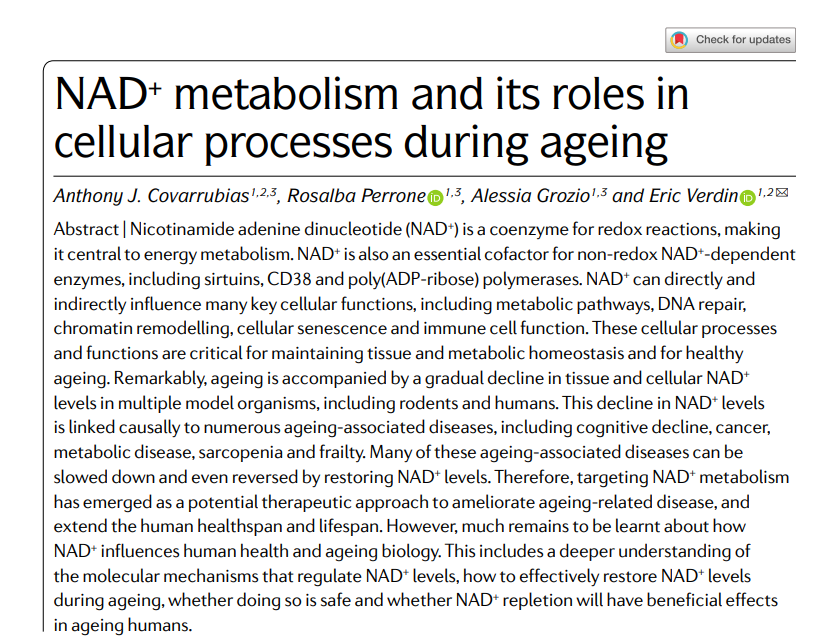
NAD+ is crucial for redox reactions, energy metabolism, and as a cofactor for non-redox enzymes like sirtuins and PARPs.
-
It directly influences metabolic pathways, DNA repair, chromatin remodeling, immune function, and cellular senescence.
-
-
Age-Related Decline:
-
NAD+ levels decrease with age in humans and animal models, contributing to metabolic dysfunction, neurodegeneration, and chronic inflammation.
-
This decline is associated with increased susceptibility to age-related diseases such as cognitive decline, cancer, and cardiovascular disorders.
-
-
Therapeutic Potential:
-
Restoring NAD+ levels through precursors like nicotinamide riboside (NR) and nicotinamide mononucleotide (NMN) has shown promise in mitigating age-related diseases in preclinical studies.
-
NAD+ augmentation therapies could potentially extend healthspan and lifespan by countering metabolic and immune dysregulation.
-
-
Mechanistic Insights:
-
The study delves into how NAD+ metabolism impacts DNA repair, epigenetic regulation, and circadian rhythms.
-
Age-related increases in NAD+ consumption enzymes (e.g., PARPs, CD38) further accelerate its depletion.
-
-
Clinical Prospects:
-
Emerging strategies to boost NAD+ include lifestyle interventions, dietary supplements, and targeting consumption pathways with inhibitors.
-
More studies are needed to establish efficacy and safety in humans.
-